Key features of the course
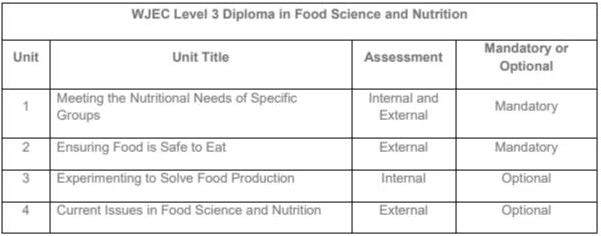
An understanding of food science and nutrition is relevant to many industries and job roles. Care providers and nutritionists in hospitals use this knowledge, as do sports coaches and fitness instructors. Hotels and restaurants, food manufacturers and government agencies also use this understanding to develop menus, food products and policies that support healthy eating initiatives. Many employment opportunities within the field of food science and nutrition are available to learners who have studied Food Science and Nutrition. You will complete three units: two mandatory and one optional, over the two years. The first mandatory unit: Unit 1 Meeting nutritional needs of specific groups will enable you to demonstrate an understanding of the science of food safety, nutrition and nutritional needs in a wide range of contexts, and through on–going practical sessions, to gain practical skills to produce quality food items to meet the needs of individuals. The second mandatory unit: Unit 2 Ensuring Food is Safe to Eat will allow you to develop your understanding of the science of food safety and hygiene; essential knowledge for anyone involved in food production in the home or wishing to work in the food industry. Again, practical sessions will support the gaining of theoretical knowledge and ensure learning is a tactile experience. Studying one of the two optional units Unit 3 Experimenting to Solve Food Production Problems Or unit 4 Current Issues in Food Science and Nutrition will allow you the opportunity to study subjects of particular interest or relevance to you, building on previous learning and experiences.
Entry Requirements:

What could this course lead on to?

Future prospects and careers
Food technologist. · Health and safety inspector. · Nutritional therapist. · Nutritionist. · Product/process development scientist. · Production manager. · Quality manager. · Secondary school teacher.

What type of student is this course suitable for?

How will I be assessed? The WJEC Level 3 Diploma in Food Science and Nutrition is assessed using a combination of internal and external assessment.
Unit 1 is usually sat at the end of year 12 (can resit in year 13 if needed) and Unit 2 is sat between May 1st – June 1st in year 13. Unit 3 or Unit 4 are assessed internally: you will need to respond to a set assignment brief at any time within the academic year, which will be marked by your teacher and moderated by WJEC